
FIORE PIZZA
FIORE PIZZA
FIORE PIZZA


Overview
Customer feedback, decline, and app usage data have long indicated that budgets were a major barrier to spend for S&E customers. The issues we were facing is that budgets we're too rigid and didn't offer the flexibility our customers needed. They were also very complex and hard to understand which resulted in lots of declines. It also took a lot of time to set up when someone just wanted to start spending.
Customer Problems
The problems we needed to solved spanned across the three main roles in Bill Spend & Expense. Those problems were:
-
As a spender, I do not have the necessary funds for a purchase.
-
As a budget owner, I lack sufficient funds for my budget.
-
As an admin, I’m unsure what controls are in place to prevent bad spend.
Hypothesis
Our budget constraints cause administrative burden and reduce usability of key features and controls, driving insufficient funds declines and long approval times.
What does success look like
Before we started looking at possible solutions, we first aligned on what success looks like for reimagining budgets. We started this process during a design sprint. As a team we decided these were the metrics that determined a successful redesign of budgets.

Reduce the percent of transactions that are declined
Increase avg TPV/customer

Introduce more flexible spending options and measure adoption of these features.
Iterating on possible solutions
During our design sprint, we spend time white boarding solutions together and going wide on possible approaches to solving the problem.


After talking through the various concepts and weighing their pros and cons, I moved into more high fidelity approaches.


User Testing
After iterating on some ideas, we decided on a direction to go test with our research team. The biggest thing we learned was there were still some confusion around some of our more advanced controls. When we dug in a little more, its was apparent that people thought of this like sharing a file in Google Drive and give people access to spend. This made us do some more iterating on the naming of things and used switches to convey that.

Interaction design
One approach we felt strong about was using an interactive bar chart to explain how budgets work.
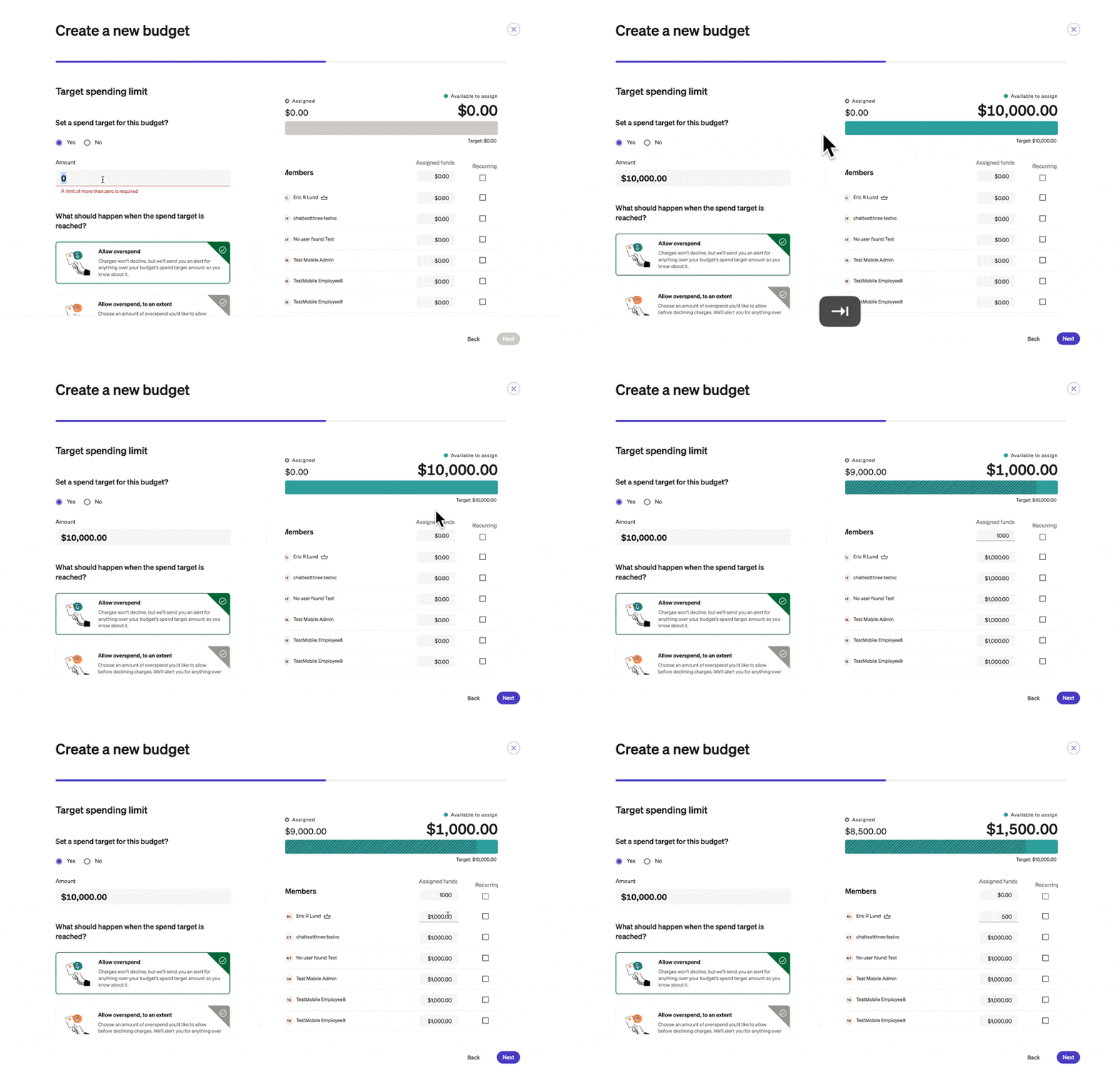
More flexibility
Before the only option was to have spend decline once it hit your budget limit. We introduced more flexibility when choosing when things declined.

Final designs


Results
To ensure that we were actually solving our customers problems, we worked with our incredible data team to ensure we were on the right path. We measured our old flow against our new one as saw some huge improvements.
Old Budget flow
-
42% completion rate
-
Median Time : 2m 10s
-
Average Time : 5m 53s
New Budget flow
-
77% completion rate
-
Median Time : 1m 30s
-
Average Time : 2m 16s
40 seconds * 8,288 flows completed ~ 5 days of time saved for the users creating a budget

We also wanted to measure adoption of the new features we added to give more flexibility when choosing when to declines charges. We saw some great numbers come through, indicating our hypothesis were right.

What's next?
While we saw some great improvements in feature adoption and better completion rates, we were still seeing high decline rates with people who were using these more flexible budget types. This was due to a confusion experience that even though the budget was limitless, people individual allocations were not.
As a quick follow up we released changes to that to experience as well as iterating on more features to drive the decline rate down. More to come on what those features were!